
Keeping K-12 at the Center of Science Education Research: A Brief Introduction to the PEER Physics Research Cohort
Educators across the nation are increasingly embracing research-backed approaches to learning in reading and math. However, science education research is not keeping pace, and physics education research often overlooks the K-12 perspective. As a result, we are missing out on opportunities to understand students’ sense of belonging in and engagement with science courses, identify key practices that make students successful, and motivate students to pursue science in college and/or career.
To ensure K-12 science educators’ voices remain part of the national conversation and to keep up with students’ experiences in science classrooms, PEER Physics created the Research Cohort. The Research Cohort offers educators the opportunity to perform research that helps them better understand their students and advance their teaching practice while getting ongoing support, feedback, and education from a community of educators and PEER Physics staff.
Who We Are: The PEER Physics Research Cohort comprises teachers who have completed two or more years of PEER Physics professional learning. Participation is open to educators across the educational landscape and across the nation. We currently have educators who work with middle school, high school, undergraduate, and graduate students!
What We Do: Participating teachers learn how to craft and refine a research question on a topic of their choosing, collect and analyze data and prepare to share their findings to a regional or national audience. Cohort members are currently investigating topics like how students’ sense of belonging impacts their science identities, how to improve participation in classroom discussions and consensus-building activities, and identifying factors that influence assessment scores.
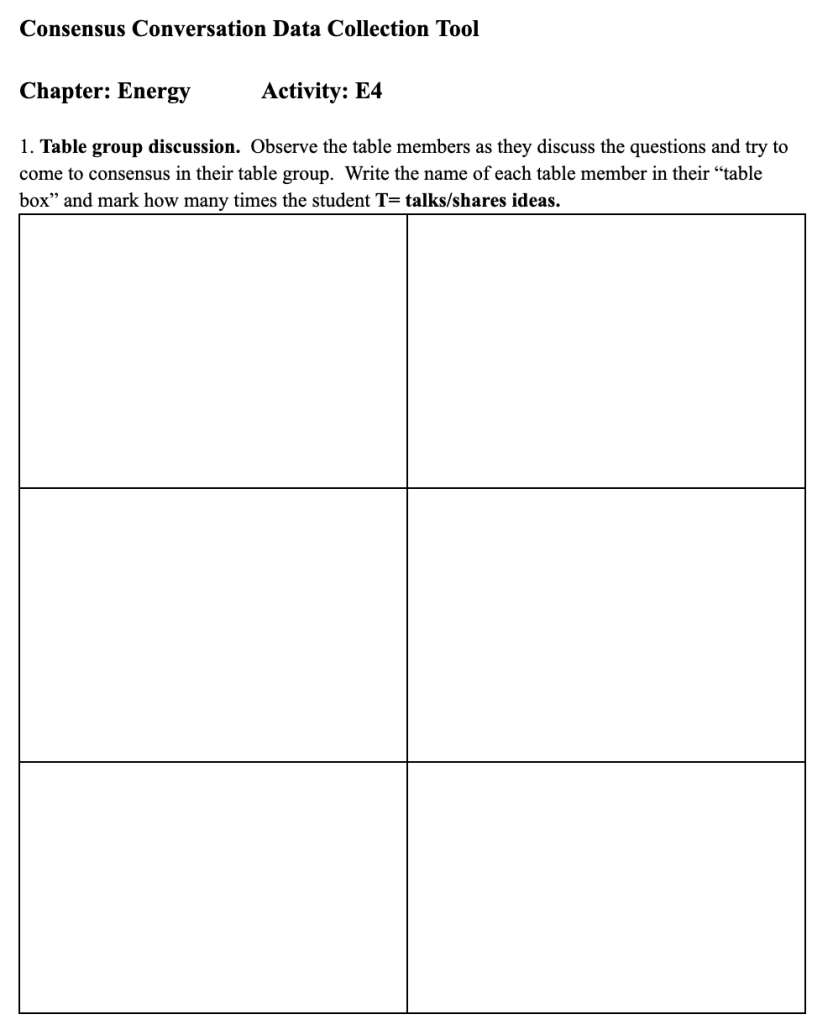
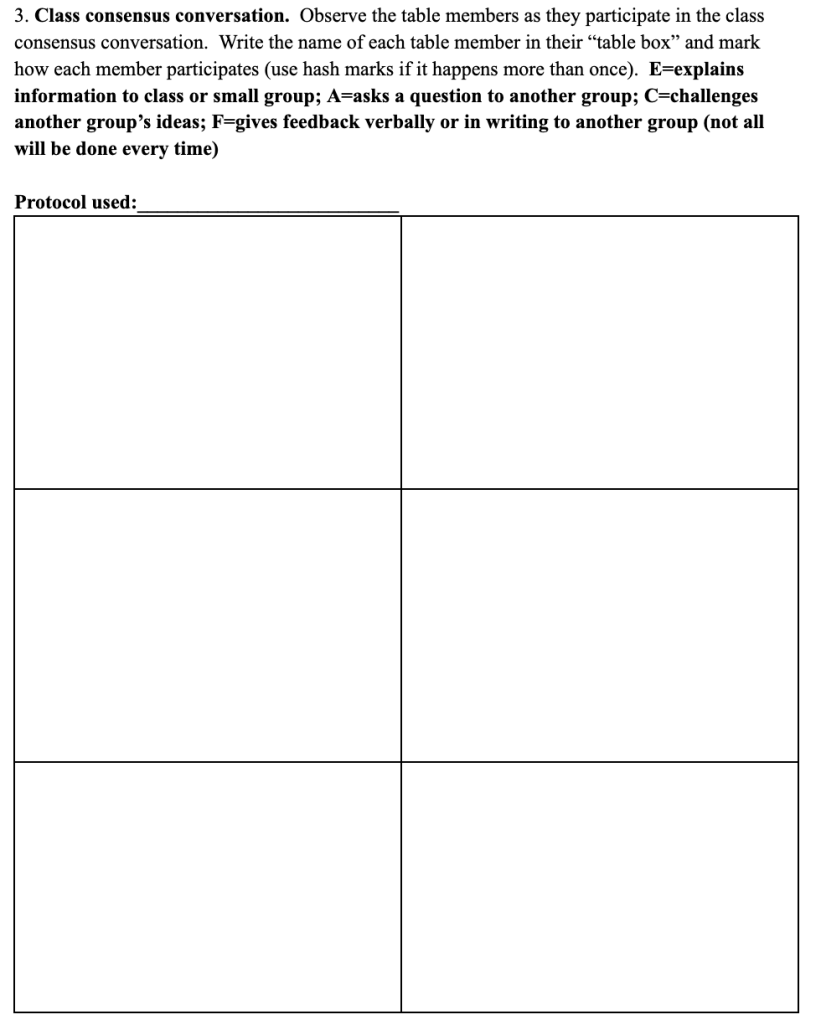
Figure 1: One participating teacher developed these participation-tracking tools to collect data on student engagement during consensus-building conversations.
Interested in Learning More? If you’d like to learn more about our research or how to join the Research Cohort, reach out to Emily or check out our work at NSTA 2026 in Anaheim, California, April 15–18, 2026! Come see us at Booth #267.

